Have you ever considered buying second hand mending and sewing notions?
If you have listed to the new episode from Seworganisedstylepodcast.com you can hear Maria and me discussing second hand notions
I have always loved second hand items, seeing value in what other people think is thrash.
To my mum's despair.
It was when I meet my husband, and got introduced to his mother, I really got into second hand shopping.
Mary my mother in law was a dedicated second-hand shopper, and even with an age difference over 60 years apart. We had so much fun roaming flea markets in Oslo, the capital of Norway.
I learned very much from her and she was a master to get good bargains. And knowing where to find all the good stuff. I found my first sewing machine in a flea market paying 100 kr for an old Singer. It just needed a new screw for the needle, and a good clean.
When we moved to our current home outside Åndalsnes , the opportunities to find second hand items was drastically reduced. Being a small rural place there wasn't really any second-hand stores or flea markets. It was still a bit shameful to by second-hand.
Luckily things have changed
Mostly I find most of my craft supplies second hand. Of course, I sometimes need to buy something new. But since I have a dedicated Crafter, I have a large haberdashery.
Why do I buy second hand?
Firstly, you can save a lot of money.
Craft supplies are expensive.
Reuse and recycle to keep things from landfills
Finding vintage and special items.
If you just started to look for second hand notions, here is how I find mine
Tell your family and friends about it. Often, they have things that they will donate to you. Or they know someone that might have something for you.
I always tell people to come with everything, and I will sort out what I can use. Often people who aren't mending, sewing or do crafts, do toss the items we would like to keep.
Look in second hand shops.
Flea markets
Markets there they sell second hand.
Garage sales etc
Online, Facebook sale groups, Esty, eBay, other sites where people advertise to sell stuff.
What am I looking for?
Good pieces of fabric. Like curtains, duvet covers tablecloths
are often cheap and gives you a lot of fabric.
I'm looking for good quality fabric. Cotton, Linnen and wool, denim.
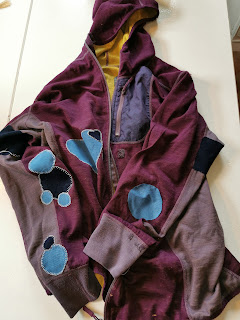
Also, I like to find embordered tablecloths and embroideries that I will later use for patches or refashion.
Sewing and embroidery thread
Knitting and crochet yarn
Before the pandemic I would have advised you to use your senses when buying second-hand. But I will not recommend you to smell and fell fabric at this time.
Instead you will need to use your eyes more. And you can still smell if the shop smells clean or mould. I strongly recommend not to by fabric or things you can't give a proper wash in a store that smells bad. If you smell mould, I really never buy anything.
It would be really sad to bring home a fabric that ruins the rest of your haberdashery.
When you are looking for fabric, check them for wear and tear, not all second-hand stores are very good at sorting out rubbish. If a piece has a hole or a stain, you might still be able to use it. Cutting around it. But if you intend to use the entire fabric, give it a good check. Well-worn fabric isn’t something you need to bring home either. Miscoloured fabrics is a big NO. I also sometimes buy clothes for refashion or just because I do like the fabric.
Jeans are a good source for denim, often you can find some really cheap. Look for the biggest size and I prefer sturdy denim, not the stretchy kind. Also look for different colours and patterns to keep a nice variety of denim. Again, check for holes and stains. I don’t mind holes and stains when people donate, but not so much when buying.
When buying wool, check for moth holes. You don’t want to invite those nasty creatures into your home. Unless you are more dedicated to mending than me 😉
Tablecloths are the one time I make an exception and might by even if stained and lots of holes.
I’m totally addicted to old hand embordered tablecloths, and feel I need to save them all.
Everything you bring home should be properly washed before you start to use it
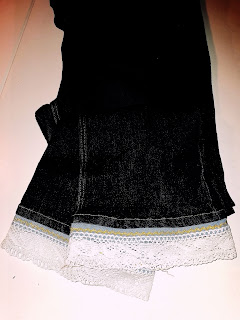
Other good items to look for are, ribbons, lace, bias binding.
Sewing and embroidery thread, crochet and knitting yarn are something I’m looking for. Though be aware you need to check it.
If the thread snaps and makes a crisp break, it's okay for you to use it. However, if it pulls apart slowly and easily, you should not buy it.
You can’t wash yarn and thread, but what you can do is to put it in the freezer. At least 14 days, but probably I leave them for one month. Of cause you don’t need to if you see it looks brand new, or you know where it came from. Just use common sense.
Sometimes you will find something smelling of mothballs, if it’s a fabric you might get the smell out, but if it’s not something very special, I find it’s really not worth the effort.
Ways to get rid of mothball smell.
Soak the affected garments in a solution of equal parts water and vinegar. Alternatively, put the clothes in the washing machine and run a cycle using only vinegar; follow up with another wash cycle using detergent and softener.
Put it in a bag with baking powder and seal the bag. Leave it for at least a week.
Put it in the freezer for one week or more.
Hang it outside on the clothesline until it’s odour free. This takes for ever
And most likely you can still smell the mothballs.
Embroidery frames, often second-hand shops have a lot of framed embroidery work that will be very cheap. Those work excellent as an embroidery hoop. Just remove the embroidery and the eyelet screw to hang it on the wall. Those frames come in a variety of shapes and sizes. Sometimes the embroidery is glued to the frame, but so far, I have just put them in hot water over night and they all came loose.
Buttons, are good items to find. Often you can find jars of buttons in the store. If you are buying loose buttons, remember you often need several of the same kind. But do by all means by the lonely but absolutely gorgeous one.
Zippers yes, vintage zippers are often better than new once.
Darning mushrooms, thimbles, rulers, pins, wonder clips, needles Are all good items to find .
Sewing Machin needles, unless they are in an un opened box, NO
Scissors maybe, embroidery scissors you can always manage to sharpen. Fabric scissors should only be used for fabric, and you don’t know what it has been used for. But if it’s cheap and you feel like taking a chance, you might be lucky.
Elastic absolutely not.
Patterns and books are great finds.
Sewing boxes are another treasure to find. just check that it’s in good condition. And don’t have holes from wood eating bugs.
If it’s wooden box you can give it good clean with water and soap.
If you can’t use water, you can use compressed air, you can get small cans so you don’t need a compressor .
Baskets for easy access to your favourite projects, and for easily bringing them with you
All kinds of other sewing accessories that you can find, knitting needles, crochet hooks, tape measures, needle cushions, Irons, iron boards etc
Storage for your sewing notions. Second hand stores often have a variety of boxes and tins.
Mason jars are one of my favourites.
Shelves for all your mending and sewing books.
Desks and tables if you are creating a new sewing space.
All the furniture in my sewing room are bought second hand.
Find Mendingmayhem on Facebook
You can also join our Mendingmayhem group.